
Hazardous Area Motors: Understanding Site Classification and Motor Suitability
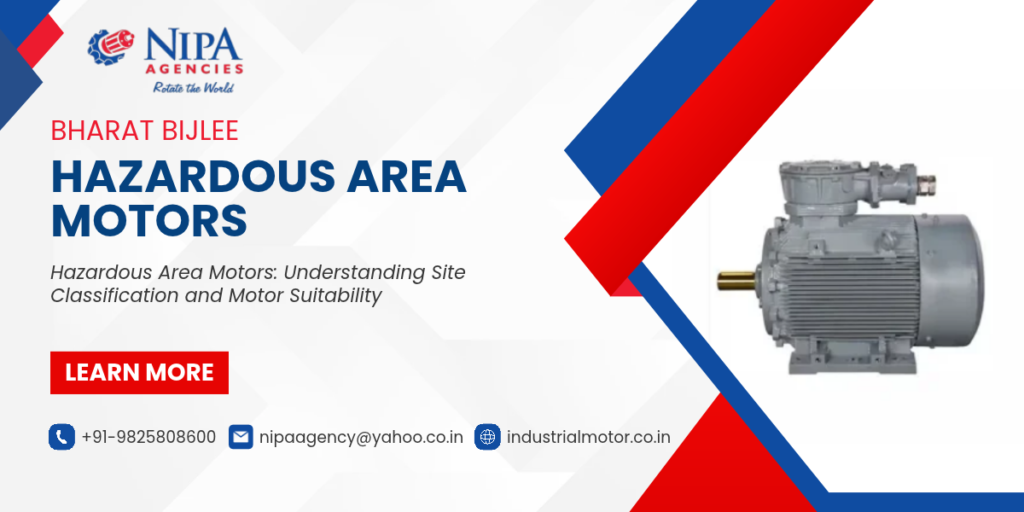
Why Hazardous Area Motor Suitability Matters
Hazardous area motors are intended for industrial locations where flammable gases, vapours, dust or other hazardous substances may create specific risks. In these environments, motor selection must consider the site’s hazardous-area classification and the requirements applicable to the installation.
Choosing a motor for a hazardous location is not simply a matter of matching power and speed. The equipment must be suitable for the identified hazardous conditions, and its specifications should be verified before procurement and installation.
Start with the Site Classification
Before selecting a motor, the facility’s qualified engineering or safety team should identify the hazardous area classification and the conditions present at the installation location. Classification depends on factors such as the type of hazardous substance and how frequently it may be present.
Buyers should share the applicable classification details with the supplier rather than assuming that a general industrial motor is suitable. The required protection concept, marking and equipment documentation must align with the site’s requirements and applicable standards.
Information to Prepare Before Procurement
A complete technical enquiry helps the supplier understand both the motor application and the hazardous-area requirements. Prepare the following information where available:
- Hazardous area classification for the installation
- Type of hazardous substance and relevant site conditions
- Required motor output, speed and electrical supply
- Driven equipment and operating duty
- Ambient conditions and installation location
- Mounting arrangement and mechanical interface
- Required certification, marking or documentation
- Quantity and project delivery requirements
For replacement projects, include the existing motor nameplate details and the equipment documentation. The replacement must be checked for both mechanical and hazardous-area suitability.
Review the Motor’s Technical Documentation
When evaluating hazardous area motors, review the product documentation carefully. Confirm that the motor’s markings and stated suitability correspond to the installation classification and the hazardous substances identified for the site.
Do not rely only on a product description or a general claim that a motor is suitable for industrial use. The actual motor configuration, protection details and supporting documentation should be verified by qualified personnel.
Consider the Application and Operating Conditions
Hazardous-area suitability is essential, but the motor must also meet the requirements of the driven equipment. Review the required output, load profile, starting conditions, electrical supply and installation arrangement.
Consider the operating environment as well, including ambient temperature, ventilation, dust or moisture exposure and access for maintenance. These factors should be included in the technical review before finalizing the motor selection.
Bharat Bijlee Hazardous Area Motors
Industrial buyers considering Bharat Bijlee hazardous area motors should confirm the available product specifications and documentation against the project’s site classification and application requirements. Product suitability must be verified for the specific installation rather than assumed from the brand or motor category alone.
When contacting a Bharat Bijlee hazardous area motor supplier Ahmedabad, share the site classification, required motor rating, operating conditions and documentation requirements. This helps make the enquiry specific and supports a more informed technical discussion.
Explore the Hazardous Area Motors product page and the Bharat Bijlee brand page for related product information.
Installation and Maintenance Considerations
Installation, inspection and maintenance of motors in hazardous locations should be carried out by qualified personnel following the applicable standards, manufacturer’s instructions and facility procedures.
Any repair, replacement or modification should preserve the equipment’s required hazardous-area suitability. If site conditions or classification change, the motor installation should be reviewed before continued use.
Questions to Clarify with the Supplier
Before placing an order, confirm the exact motor model and configuration, hazardous-area markings, supporting documentation, electrical and mechanical specifications, availability and commercial terms. Make sure the proposed motor corresponds to the information approved by the project’s engineering team.
Clear documentation and careful verification help reduce uncertainty during procurement and support a safer, more coordinated installation process.
Discuss Your Hazardous Area Motor Requirement
If your project requires hazardous area motors, prepare the site classification and application details before requesting product information or a quotation. Nipa Agencies can discuss Bharat Bijlee motor requirements and available options based on the specifications shared for your installation.

 Users Today : 0
 Users This Month : 91
 Total Users : 113