
Crane & Hoist Application Motors: Planning Motor Selection for Material Handling
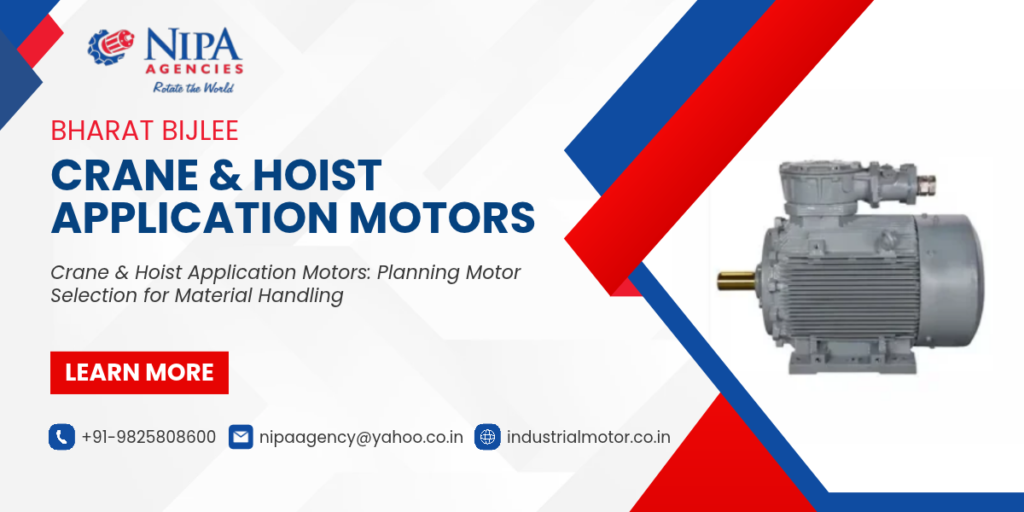
Planning Motor Requirements for Crane and Hoist Systems
Crane and hoist application motors are used in material-handling equipment where motor selection must account for lifting requirements, operating cycles and the conditions under which the equipment works. A suitable motor should be matched to the crane or hoist design and the intended duty.
Instead of selecting a motor based only on power rating, project teams should review how the equipment starts, stops, lifts and moves loads throughout a working shift. This helps establish the application requirements before procurement.
Understand the Material-Handling Duty
Crane and hoist systems may operate under different load patterns. Some applications perform frequent lifting cycles, while others handle loads less often or operate for longer periods. The duty profile is an important input when specifying a motor.
Before requesting product information, identify:
- Type of crane or hoist and its intended function
- Rated lifting capacity and typical load range
- Frequency of lifting and lowering cycles
- Expected operating hours and duty pattern
- Required lifting, lowering and travel movements
- Starting, stopping and control requirements
- Installation environment and available electrical supply
These details help the engineering team and supplier understand the application and determine which motor specifications need to be evaluated.
Review the Main Motor Selection Factors
Load and Operating Cycle
Consider the loads handled during normal operation and the frequency of lifting cycles. The motor should be selected for the equipment’s intended duty rather than an assumed average workload.
Starting and Stopping Requirements
Crane and hoist systems may require controlled starting, stopping and movement. Share the control arrangement and operating sequence so the motor can be assessed for the application’s requirements.
Electrical and Mechanical Compatibility
Confirm the electrical supply, required motor rating, mounting arrangement, shaft and coupling details. For replacement projects, compare the existing motor nameplate and installation dimensions with the proposed configuration.
Operating Environment
Review ambient conditions, ventilation, dust, moisture and the motor’s location within the equipment. The installation conditions should be included in the specification and supplier discussion.
Crane Duty Motor Requirements
A crane duty motor is selected with the operating demands of crane equipment in mind. The actual requirements depend on the equipment design, load pattern, operating cycle and control system.
When evaluating crane duty motor options, provide the crane or hoist details and explain how the equipment is expected to operate. This helps ensure that the proposed motor is reviewed against the intended application rather than chosen only by a general category name.
Bharat Bijlee Crane and Hoist Application Motors
Industrial buyers considering Bharat Bijlee crane hoist application motors should verify the available product specifications against the equipment requirements. Confirm the motor rating, duty information, electrical details and mechanical configuration before finalizing the selection.
For procurement enquiries, share the application details with a crane hoist motor supplier and request information on the proposed motor configuration, availability and applicable commercial terms.
Explore the Crane & Hoist Application Motors product page and the Bharat Bijlee brand page for related information.
Discussing Bharat Bijlee Crane Duty Motor Requirements
When a project specifies a Bharat Bijlee Crane Duty Motor supplier or bharat bijlee crane duty motor supplier, provide the equipment type, lifting capacity, operating cycle, motor rating and installation details. These details support a focused discussion about the required crane duty motor configuration.
For buyers comparing Bharat Bijlee Crane Duty Motor suppliers, it is useful to confirm that the quoted motor matches the same technical requirements, duty information and mechanical arrangement. Comparing equivalent specifications makes the procurement review clearer.
Prepare a Complete Motor Enquiry
A well-prepared enquiry should include the crane or hoist type, motor quantity, required ratings, operating duty, electrical supply, installation arrangement and project timeline. For replacement work, include the existing motor nameplate and any relevant equipment documentation.
When contacting a Bharat Bijlee crane hoist motor supplier Ahmedabad, sharing complete technical details can help the supplier understand the application and provide relevant product information for review.
Coordinate Selection with the Project Team
Before ordering, have the proposed motor details reviewed by the engineering or maintenance team responsible for the crane or hoist. Confirm compatibility with the equipment design, control system and installation requirements.
Following the manufacturer’s documentation and the facility’s approved installation and maintenance procedures supports responsible equipment operation.
Request Information for Crane and Hoist Motors
If your material-handling project requires crane and hoist application motors, prepare the duty profile and equipment specifications before requesting a quotation. Nipa Agencies can discuss Bharat Bijlee motor requirements and available options based on the information provided for your application.

 Users Today : 0
 Users This Month : 91
 Total Users : 113