
Squirrel Cage Motors for Industrial Applications: Troubleshooting Common Operating Issues
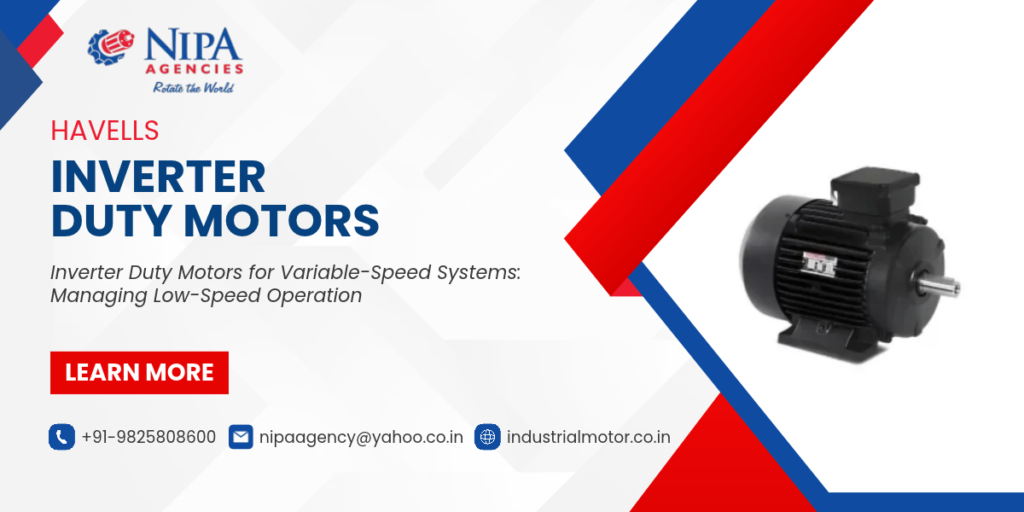
Inverter duty motors are used in industrial systems where motor speed is adjusted through a variable-frequency drive (VFD). When an application operates at low speed for extended periods, the motor’s cooling, load and operating range need to be reviewed alongside the drive settings.
Understanding these conditions helps maintenance and engineering teams assess whether the motor and drive arrangement are suitable for the application’s actual operating pattern.
Inverter Duty Motors and Low-Speed Operation
In a variable-speed system, the motor may run at different speeds depending on process demand. At reduced speed, the motor’s own shaft-mounted fan may move less air than it does at normal speed.
Whether this affects the application depends on the motor design, load, operating duration and cooling arrangement. Review the manufacturer’s operating guidance before assuming that the motor can run continuously at any reduced speed.
Review the Load at Reduced Speed
Different driven equipment behaves differently when speed changes. A conveyor, pump, fan or machine may have a distinct load pattern across its operating range.
Identify the required torque and load at the minimum and maximum speeds. This information helps determine whether the proposed motor can meet the application’s demands throughout the intended range.
Check Cooling and Ventilation Requirements
For applications that spend significant time at low speed, review the motor’s cooling method and the expected operating duration. Confirm whether the specified cooling arrangement is suitable for the intended speed range and load.
Also check the installation environment for restricted airflow, elevated ambient temperature or nearby equipment that may affect ventilation. Follow the motor documentation when determining whether additional cooling provisions are required.
Review Drive Settings and Operating Range
The VFD should be configured for the motor and application. Review the intended minimum and maximum frequency, acceleration and deceleration settings, control method and any relevant motor protection parameters.
Where the application includes frequent speed changes or extended operation at reduced speed, share these details during the technical review. Motor and drive compatibility should be assessed as a complete system.
Consider Installation and Maintenance Conditions
Check mounting, shaft dimensions, coupling arrangement and installation space before selecting a motor. For replacement projects, confirm that the proposed motor fits the equipment and suits the current process requirements.
Maintenance teams should also monitor operating trends and record changes in temperature, vibration or performance. Any unusual condition should be investigated by qualified personnel according to site procedures.
Selecting Inverter Duty Motors for a VFD Application
A supplier enquiry should include the driven equipment, load profile, required speed range, operating hours, drive details and motor ratings. These details help establish the conditions under which the motor is expected to operate.
Buyers evaluating Havells inverter duty motors can use this information to discuss application suitability. Sharing the operating range with an inverter duty motor supplier supports a more focused technical review.
Quotation and Specification Review
Before ordering, compare the quoted motor specifications with the application requirements, including power, voltage, speed range, cooling, mounting and drive compatibility.
For businesses searching for a Havells inverter duty motor supplier Ahmedabad, the Havells motors page provides brand-related information. Keep the final specifications available for installation, drive configuration and maintenance records.
Low-Speed Operation Checklist
- Minimum and maximum operating speeds identified
- Load and torque requirements reviewed across the speed range
- Cooling method checked for low-speed operation
- VFD settings and motor compatibility reviewed
- Installation and ventilation conditions confirmed
- Operating limits and maintenance guidance checked
Low-speed operation should be assessed using the motor’s specifications and the application’s real operating conditions. Reviewing load, cooling and drive settings together helps teams make a more informed decision when selecting inverter duty motors for variable-speed systems.

 Users Today : 0
 Users This Month : 81
 Total Users : 103